Posted by Hallee on Jan 26, 2010 in
Critical Thinking,
homeschooling,
Parenting
Fallacies from relevance attempt to derail the point by bringing irrelevancies into the debate. In this post, I discuss the faulty appeal to force and the Argumentum Tu Quo.
Pin It

Tags: Ad hominem, Appeal, Appeal to force, Argument, Argumentation theory, Arguments, Argumentum ad baculum, Argumentum Ad Hominem Tu Quoque, Argumentum Baculinum, Attacking Faulty Reasoning, conclusion, Conflation, Critical Thinking, Deduction, Fallacies, Fallacies from Relevance, Fallacies of Darwinism, Fallacy, Fallacy Logical Fallacy, Formal fallacy, Genetic fallacies, Information, Laws of thought, Loaded question, Logic, Logical fallacies, Objections to evolution, Philosophy, Reasoning, Religion/Belief, Slippery slope, Stem cells, Thought, Tu quoque
Posted by Hallee on Jan 12, 2010 in
Critical Thinking,
homeschooling
A fallacy from relevance occurs when the response to an argument is not relevant to the argument. They ignore the point and attempt to derail the argument by bringing irrelevancies into the debate. In this post, I will discuss the faulty appeal to envy, the faulty appeal to pity, and the faulty appeal to authority.
Pin It
Tags: Ad hominem, Albert Einstein, Appeal to pity, Argument, Argument from authority, Argumentation theory, Arguments, Attacking Faulty Reasoning, conclusion, Conflation, Critical Thinking, Deduction, Fallacies of Darwinism, Fallacy, Fallacy from Relevance, Formal fallacy, Genetic fallacies, Information, Laws of thought, Loaded question, Logic, Logical fallacies, Middle school biology teacher, Objections to evolution, Philosophy, Reasoning, Religion/Belief, Slippery slope, Stephen Hawking, Survival tool, Theoretical physicist, Thought
Fallacies from relevance ignore the point at hand and attempt to derail the argument by bringing irrelevancies into the arena of the debate. In this post, I will discuss the Argumentum ad Populum and the Appeal to Tradition.
Pin It
Tags: Appeal to tradition, Argument, Argument from authority, Argumentation theory, Arguments, Argumentum ad populum, Attacking Faulty Reasoning, conclusion, Conflation, Critical Thinking, Deduction, Fallacies of Darwinism, Fallacy, Formal fallacy, Genetic fallacies, Hydrogenated soybean oil, Information, Laws of thought, Loaded question, Logic, Logical fallacies, Objections to evolution, Philosophy, Poison Control center, Reasoning, Religion/Belief, Slippery slope, Survival tool, Thought
Posted by Hallee on Dec 29, 2009 in
Critical Thinking,
homeschooling,
Parenting
Fallacies from relevance ignore the point at hand and attempt to derail the argument by bringing irrelevancies into the arena of the debate. In this post, I will discuss the Ad Hominem abusive and the Ad Hominem circumstantial.
Pin It
Tags: Ad hominem, Argument, Argument from fallacy, Argumentation theory, Arguments, Attacking Faulty Reasoning, conclusion, Conflation, Critical Thinking, Deduction, Fallacies of Darwinism, Fallacy, Formal fallacy, Genetic fallacies, Homeschool, Information, Laws of thought, Loaded question, Logic, Logical fallacies, Modal logic, Non-classical logic, Objections to evolution, Philosophical logic, Philosophy, Poisoning the well, Propositional logic, Reasoning, Slippery slope, Speaker, Survival tool, Thought
Posted by Hallee on Dec 19, 2009 in
Critical Thinking,
homeschooling
An argument is called “valid” when it’s form is correct and does not lend to a mistake in reasoning due to a faulty structure. An argument is deemed “cogent” when its form is valid and its premises are sound. In logic, “valid” means that if the premises are true, the conclusion is also true. A fallacy can occur when the form is adulterated to reach a false conclusion.
Pin It
Tags: Affirming the consequent, Argument, Argumentation theory, Arguments, Attacking Faulty Reasoning, conclusion, Conflation, Critical Thinking, Deduction, Denying the antecedent, Fallacies, Fallacies of Darwinism, Fallacy, Formal fallacy, Hypothetical syllogism, Information, Jason Lisle, Laws of thought, Loaded question, Logic, Logical fallacies, Modus ponens, Modus tollens, Objections to evolution, Philosophy, Reasoning, Rules of inference, Slippery slope, Thought
Posted by Hallee on Dec 11, 2009 in
Critical Thinking,
homeschooling
The main division between forms of reasoning is between deductive reasoning and inductive reasoning. Formal logic has been described as ‘the science of deduction’ while inductive reasoning is generally carried out within the field of informal logic. Both are vital and important tools in the disciplined work of thinking.
Pin It
Tags: Argument, Argumentation theory, Arguments, Attacking Faulty Reasoning, conclusion, Conflation, Critical Thinking, Deduction, Deductive reasoning, Epistemology, Fallacies of Darwinism, Fallacy, Formal fallacy, Inductive reasoning, Information, Laws of thought, Loaded question, Logic, Logical fallacies, Objections to evolution, Philosophy, Problem solving, Reasoning, Religion/Belief, Slippery slope, Thought
Posted by Hallee on Nov 28, 2009 in
Critical Thinking,
homeschooling
The Laws of Thought
1. The Law of Identity
2. The Law of Noncontradiction
3. The Law of Excluded Middle (aka. Excluded Third)
Pin It
Tags: Argument, Argumentation theory, Arguments, Attacking Faulty Reasoning, Boolean algebra, conclusion, Conflation, Critical Thinking, Deduction, Fallacies of Darwinism, Fallacy, Formal fallacy, Information, Law of excluded middle, Law of thought, Law/Crime, Laws of thought, Loaded question, Logic, Logical disjunction, Logical fallacies, Objections to evolution, Philosophy, Principle of contradiction, Propositional logic, Reasoning, Religion/Belief, Rules of inference, Slippery slope, Thought
Posted by Hallee on Nov 19, 2009 in
Critical Thinking,
homeschooling
These seven critical reading strategies can be learned readily and then applied not only to reading selections in a Literature class, but also to your other college reading. Mastering these strategies will help you handle difficult material with confidence.
Pin It
Tags: Analyzing, Argument, Argumentation theory, Arguments, Attacking Faulty Reasoning, Books, conclusion, Conflation, Critical pedagogy, Critical reading, Critical Thinking, Deduction, Dialectic, Education, Educational psychology, Epistemology, Fallacies of Darwinism, Fallacy, Formal fallacy, Information, Laws of thought, Loaded question, Logic, Logical fallacies, Objections to evolution, Pedagogy, Philosophical logic, Philosophy, Reading comprehension, Reasoning, Slippery slope, Speed reading, Synthesizing, Theories of truth, Thought, Truth
Posted by Hallee on Nov 12, 2009 in
Critical Thinking,
homeschooling
We believe that Critical Thinking is a mental toolbox containing a number of thinking tools. We intend to teach our children how to use all those tools. One of those tools is the ability to discriminate; specifically meaning the ability to discriminate between a fact, an opinion, an assumption, or an inference.
Pin It
Tags: Argument, Argumentation theory, Arguments, Attacking Faulty Reasoning, Cognition, conclusion, Conflation, Critical Thinking, Deduction, Discriminating, Education, Epistemology, Fact, Fallacies of Darwinism, Fallacy, Formal fallacy, important tool, Inference, Information, Knowledge, Laws of thought, Learning, Loaded question, Logic, Logical fallacies, Objections to evolution, Philosophy, Problem solving, Reasoning, Religion/Belief, Slippery slope, Thought
Posted by Hallee on Nov 4, 2009 in
Critical Thinking,
homeschooling
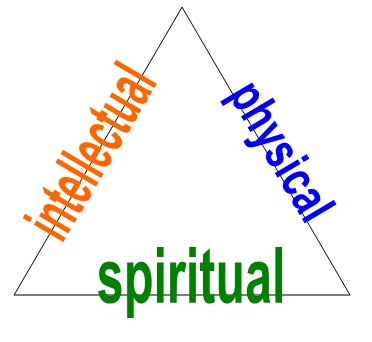
A great deal of the content of this website is dedicated to information pertaining to physical and spiritual needs. Hopefully, that provides some insight into how we, as parents, meet the needs of our children in those two very often overlooked areas. Keeping things in balance, we wanted to offer some insight into the most overlooked area, that being how we choose to meet their intellectual needs, as well.
Pin It
Tags: Argument, Argumentation theory, Arguments, Attacking Faulty Reasoning, Cognition, conclusion, Conflation, Critical Thinking, Culture, Deduction, Discriminating, Education, Education reform, Educational psychology, Fallacies, Fallacies of Darwinism, Fallacy, Formal fallacy, Information, John R. Chambers, Laws of thought, Learning, Loaded question, Logic, Logical fallacies, Michael Scriven, Objections to evolution, Philosophy, Reasoning, Religion/Belief, Richard Paul, Robert H. Ennis, Skill, Slippery slope, Socratic questioning, Synthesizing, Thinking tools, Thought, University of Illinois